
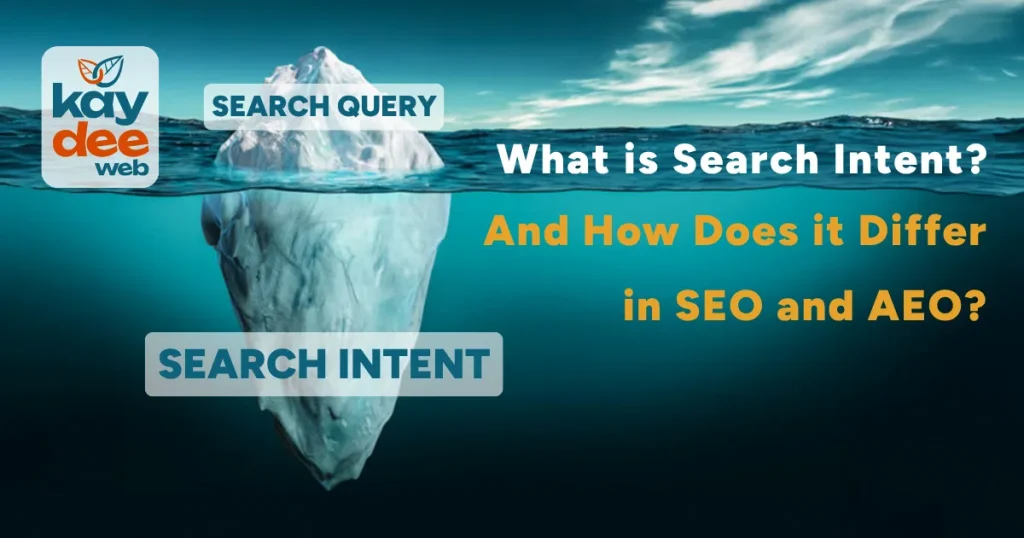
Search intent is the purpose or motivation behind a user’s online search query. It explains why someone is searching, whether they want to learn something, find a specific website, research a product, or make an immediate purchase.
Understanding search intent allows search engines to deliver the most relevant results.
If you’ve ever typed a half-formed thought, or 3 words from a song you can’t remember the name of, into a search bar, hit enter, and been amazed when the results were exactly what you were looking for, that’s not magic; it’s search intent.
When we create content, we’re trying to speak directly to a person with a specific need at that exact moment.
Generally, human curiosity and consumer behaviour will fit into one of these categories:
- The Learner (informational): They want to know something. (e.g., “How to fix a dripping tap” or “What is a good strategy for email marketing?”)
- The Commuter (navigational): They already know where they want to go; they’re just using the search bar to get there. (e.g., “Spotify login” or “Kaydee Web contact page”)
- The Researcher (commercial): They know they want to buy something soon, but they’re doing their homework first. (e.g., “Best cameras 2026” or “Mailchimp vs ConvertKit”)
- The Buyer (transactional): They have their card out. They’re ready to take action. (e.g., “Buy organic coffee beans online” or “Book web design consultation”)
If your page is trying to sell a product to the learner who just wants a simple answer to their question, they’re going to hit the back button faster than you can say “high bounce rate.”
Understanding your website visitors’ search intent means meeting them where they are.
What is Search Intent for SEO?
For SEO, search intent is the framework used to align your website content with what search engine algorithms look for in response to users’ queries.
By understanding search intent, you can optimise your content so search engines can accurately index and rank your pages.
Google’s goal is to keep users happy by giving them relevant results. It reads structural clues on your website, like your headings, page titles, and the language you use, to figure out which of the four categories above your content belongs in.
For example, if you include question words (who, what, how) and write in-depth guides, Google flags your page as a great match for informational search intent.
If you use words like buy, discount, or add to cart, Google flags it as transactional search intent.
When you align your SEO with search intent, you build long-term authority and credibility. It tells search engines and their users that your website is a well-structured resource that won’t waste anyone’s time.
What is Search Intent for AEO?
For AEO (Answer Engine Optimisation), search intent focuses on providing users with direct, immediate, conversational answers that AI tools, like Gemini and ChatGPT, can easily extract and deliver.
AEO targets conversational prompts to feed AI tools, often resulting in direct “zero-click” summaries – these are the AI overviews that come up before the website links on Google search result pages.
If a user asks an AI tool, “What’s the best temperature to bake artisan sourdough?“, the AI looks for content that answers that question quickly and succinctly.
AI won’t read your 500-word backstory about your grandmother’s kitchen in Italy (as lovely as that sounds). It’s looking for a clear, authoritative, bite-sized answer that it can clip and deliver to the user.
Optimising search intent for AEO means making your tech stack and your writing accessible to AI tools so they can clip information from your website in response to a users prompt and provide a digital citation to send them your way.
The Differences Between Search Intent for AEO and SEO
While the goal of both SEO and AEO is to get found online, they approach search intent from slightly different angles.
While SEO focuses on guiding users to a website that answers their question, AEO delivers the answer on the spot.
Here is how those differences look in practice:
The User’s Goal
In traditional SEO, users often explore, browse, compare, and read multiple sources.
In AEO, the user’s mindset is more immediate; they are looking for a direct, singular answer to a specific question.
How Content is Found
SEO relies heavily on keywords, high-quality links, site authority, and traditional search engine indexing.
AEO relies on clear entity recognition, structured data, and direct, conversational responses that an AI can extract instantly.
The Formatting Focus
For SEO, we tend to build comprehensive landing pages, long-form blogs, clear navigation menus, and robust internal linking structures.
For AEO, the focus shifts to short paragraphs, Q&A formats, clean bullet points, and highly scannable headings.
The End Result
A successful SEO strategy means a user clicks through to your website to experience your brand.
A successful AEO strategy means an AI can synthesise your content and cite your brand as the trusted source.
How to Create Content for AEO and SEO Search Intent
When it comes to search intent, you don’t have to choose between SEO and AEO; they’re actually a great team.
Here’s how to speak to both man and machine:
- Get straight to the point: If a section of your blog answers a specific question, make the heading the question itself, and make the next 40-60 words a clear answer.
- Embrace scannability: Use bullet points and short, 1- to 3-sentence paragraphs. This helps tired human eyes scan your page, and it helps AI models easily extract key takeaways.
- Write like you speak: Keep your language plain, conversational, and grounded. Natural phrasing echoes the way people actually speak to AI tools.
Whether you’re restrategising your SEO or preparing your brand for the future, and the now, of AI, the golden rule remains exactly the same: Create digital experiences that support real people.
By focusing on search intent, you’re looking past the metrics to the human on the other side of the screen, building trust, establishing authority, and creating a digital space that feels accessible, helpful, and easy to navigate.
If you need a hand with your search-intent strategy or with structuring your content to get found by search engines and AI, let’s chat.